The Quiet Shift Happening at Diverter Valves: Why Heavy Industry Is Automating Multi-Destination Conveying
Heavy industry plants that route abrasive materials to multiple storage silos or process destinations — cement, mining, and power generation among them — are increasingly replacing manually operated flap and plug diverter valves with automated, pneumatically actuated diverter systems. The driver isn't just convenience: manual routing slows changeovers, and traditional diverter designs wear out fast under abrasive material flow, turning a routing valve into one of the most failure-prone points in the entire conveying line. The fix isn't automation alone — it's automation paired with a diverter engineered to survive the abrasive impact of the material passing through it, which is where most standard diverter designs fall short.
The Problem Nobody Notices Until It Fails
Ask a plant operator to name the parts of a pneumatic conveying system, and you'll usually hear about the blower, the rotary valve, maybe the pipe itself. The diverter valve rarely comes up — until it fails.
Here's the thing about diverter valves: they sit at the exact spot where material changes direction. Every time abrasive material — cement, kiln dust, ash, ore — gets routed from one leg of a pipeline into another, it's not gliding smoothly around a corner. It's slamming into a surface and deflecting. That single mechanical reality is why diverter valves are consistently one of the highest-wear, highest-failure points in an abrasive conveying system, even when the rest of the line is holding up fine.
Now add automation into the picture. As plants move from single-destination lines to systems routing material to three, four, or more storage silos on demand, the diverter isn't just switching occasionally anymore — it's cycling constantly, on a schedule dictated by production, not maintenance convenience. A diverter that wears out in six months under light-duty use might not survive six weeks under that kind of cycling if it wasn't built for it.
That's the story showing up across the industry right now: the shift toward automated, multi-destination diverter routing is accelerating, and it's exposing which diverter designs were actually built for abrasive service — and which ones weren't.
Why Automated Routing Is Becoming the Standard
The push toward automation isn't happening in a vacuum. A few forces are converging at once:
Plants are running more destinations per line. Modern cement, mineral processing, and power facilities are increasingly designed around flexible storage — multiple silos feeding multiple downstream processes — rather than one line, one destination.
Manual valve operation doesn't scale. Sending a technician to physically open and close a valve every time material needs to change course works fine for occasional routing. It becomes a bottleneck the moment routing needs to happen continuously or on a tight production schedule.
Automated systems reduce human exposure to hazardous zones. Fewer manual interventions at conveying lines means fewer opportunities for injury around high-pressure, abrasive material flow.
Digital plant integration is expanding. As more of the plant moves toward centralized, sensor-driven control, a manually operated diverter becomes the odd piece of equipment that can't talk to the rest of the system.
None of that is controversial — most plant engineers would agree automation is the right direction. The part that gets overlooked is what happens to the diverter itself once it's cycling automatically, dozens or hundreds of times a day, moving material that's actively trying to wear it down with every pass.
The Part Most Automation Conversations Skip
Automating a diverter valve doesn't make the material any less abrasive. If anything, it raises the stakes — a diverter that fails under manual operation causes an inconvenience; a diverter that fails inside an automated, unattended routing sequence can cause a misdirected batch, a spill, or unplanned downtime that nobody catches until it's already a problem.
Traditional flap and plug-style diverters were never designed with high-cycle, high-abrasion service in mind. Under that kind of use, they wear unevenly, lose their seal, and start leaking material into the closed leg — which is exactly the failure mode that undermines the whole point of automating in the first place. An automated system is only as reliable as the valve doing the actual diverting.
This is the piece of the automation story that doesn't get talked about enough: the valve engineering has to keep pace with the automation, or the automation just moves the failure point instead of eliminating it.
How Delta Ducon Engineers Around This Problem
This is a problem Delta Ducon has spent a lot of time solving, because it's exactly the kind of failure mode that shows up in the cement, mining, and power plants they've worked in for over a century.
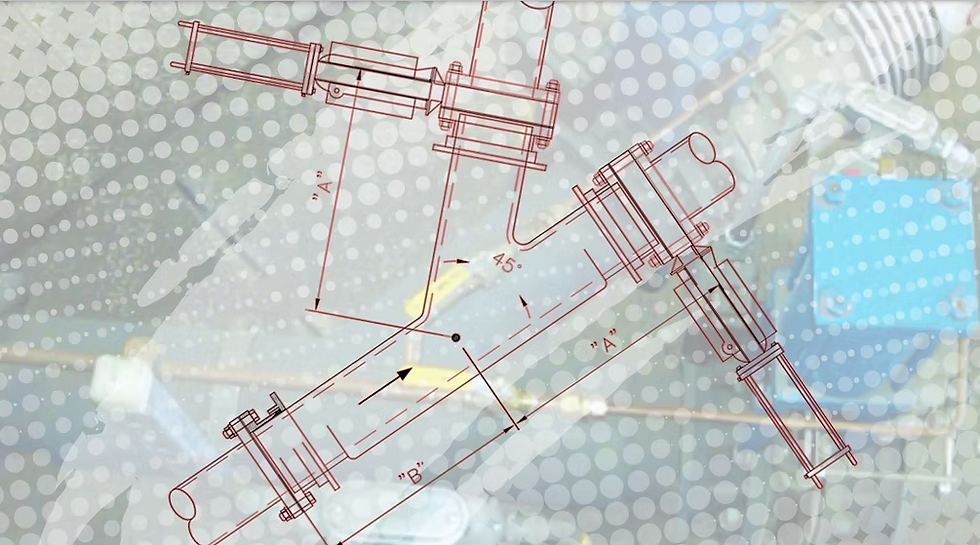
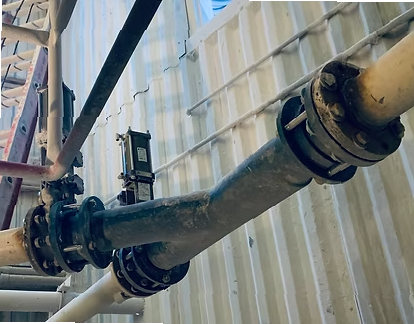
Their answer is the PERMA/flo KG Diverter Valve, and it's worth understanding why the design holds up where standard diverters don't. Instead of relying on a single wear-prone flap or plug sitting directly in the material stream, the KG Diverter Valve uses a modular design — an abrasion-resistant 45-degree lateral paired with two pneumatically actuated knife gate valves. When it's time to route material to a different leg, a signal closes the appropriate gate, and material builds up against that closed barrier just long enough to deflect itself into the open leg — which means the material is doing a lot of the directional work by impacting itself, not by grinding directly against a mechanical wear surface every single cycle. The valve body itself is cast from proprietary alloys hardened well beyond what standard steel diverters use, so what does wear, wears far more slowly.
That combination — pneumatic actuation that's fully compatible with automated control systems, plus a body engineered specifically to survive abrasive impact — is what makes the KG Diverter Valve a fit for the automated, multi-destination routing plants are increasingly building toward. Delta Ducon has written in more detail about the engineering reasoning behind this approach, including how controlling material velocity at the diverter point extends component life, in The Engineered Approach to Velocity Control in Abrasive Conveying Reliability.
What this looks like as part of a full system:
Automation-ready pneumatic actuation on every KG Diverter Valve, built to integrate with plant control signals rather than requiring manual operation
Modular, field-serviceable design, so a worn component can be addressed without replacing the entire valve assembly
Abrasion-resistant construction using the same PERMA/flo alloy technology that protects Delta Ducon's pipe and elbows elsewhere in the conveying line
A century of experience engineering multi-destination routing for cement, kiln dust, ash, and mineral processing lines — the exact materials driving this automation trend
Integration into complete conveying system design, not just a standalone valve — Delta Ducon engineers the diverter as part of the broader dilute, dense, or semi-dense phase system it's operating within, which you can see across their full pneumatic conveying systems line
What This Means for a Plant Evaluating Its Own System
If a plant is planning to automate routing to multiple destinations — or already has and is fighting more diverter failures than expected — the question worth asking isn't "how do we automate this?" It's "what's actually going to survive being automated?" A control signal can tell a valve when to switch. It can't make a valve durable enough to survive doing that thousands of times a year in an abrasive material stream. That part still comes down to engineering, and it's the difference between an automation upgrade that pays off and one that just moves the maintenance headache from the control room back to the pipeline.
Frequently Asked Questions
Why do diverter valves wear out faster than other parts of a conveying line? Diverter valves sit at the exact point where material changes direction, which means the material impacts a surface inside the valve on every single cycle rather than gliding through in a straight line. That repeated impact concentrates wear at the diverter more than at straight sections of pipe.
Does automating a diverter valve make it wear out faster? It can, if the valve wasn't designed for high-cycle use. Automated systems typically route material far more frequently than manual operation, so a diverter that held up fine under occasional manual switching may fail much sooner once it's cycling continuously as part of an automated system.
Can existing manual diverter valves be retrofitted with pneumatic actuation? It depends on the specific valve and system design. In many cases, a full diverter replacement engineered for both automation and abrasion resistance is a more reliable path than retrofitting actuation onto a valve that wasn't built for high-cycle abrasive service in the first place.
What industries are seeing the most demand for automated multi-destination routing? Cement, mineral processing, and power generation are among the industries most affected, since these facilities increasingly route materials like cement, kiln dust, fly ash, and ore to multiple storage silos or process destinations from a single conveying line.
Frequently searched alongside this topic: automated diverter valve pneumatic conveying, multi-destination material routing, abrasion-resistant diverter valve, KG diverter valve, pneumatic conveying automation, cement plant diverter valve wear, industrial routing valve automation.